
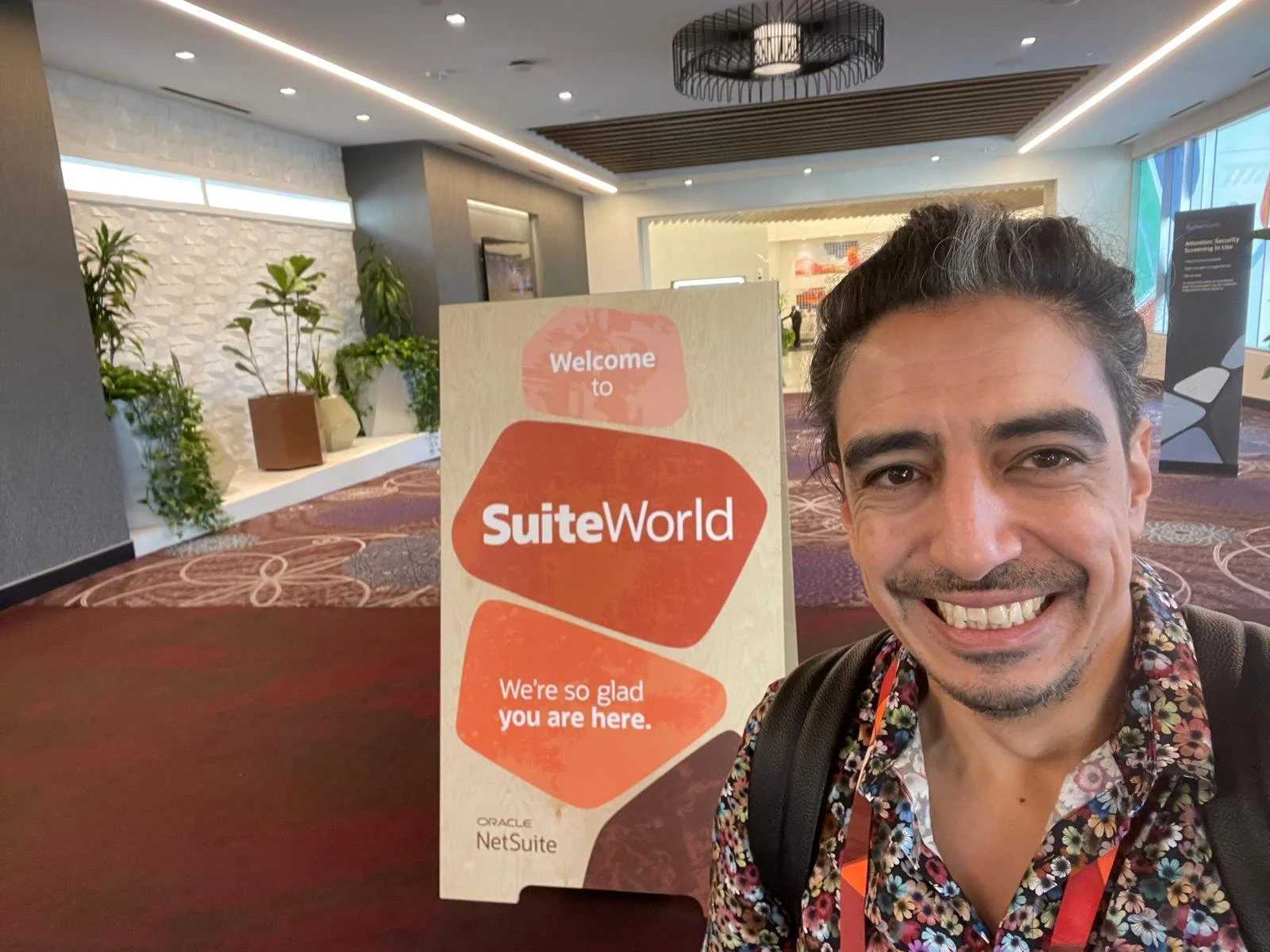
For SuiteWorld 2026 NetSuite’s feature growth efforts were entirely focused on NetSuiteNext, aiming for a shift in how we handle ERP implementations to an almost full conversational mode.
NetSuite introduced SuiteExpress setting a high bar for what’s intended to achieve: take ERP implementations effort down from months and years to weeks.
With SuiteExpress, NetSuite bets on a chat-driven experience that combines product knowledge with specific domain data as the context for NetSuiteNext to guide users through a conversational implementation flow.
This way, NetSuite users get to realize value in a more immediate manner than with traditional implementations.
SuiteExpress: Historical business and Product context
With SuiteExpress, NetSuite leverages all of its business and product expertise as the training data for the agents behind NetSuiteNext.
By relying on real-world insights from actual brands operating in NetSuite, SuiteExpress closes the gap between agents general business knowledge and specific domain data for brands using NetSuite’s ERP.
This consolidation conforms a one of a kind dataset that covers all industries and use cases for native and custom NetSuite usage as the source for NetSuiteNext generated responses.
More specifically, SuiteExpress context is built from 2 knowledge bases:
Customer Knowledge Base: Everything related to the business implementing NetSuite. Every piece of data that can be fed into NetSuiteNext, from meeting notes to any other document or Third Party datasource that refers to the user’s operations, is used to create a common understanding of the business between agents, consultants and client.
NetSuite Knowledge Base: This dataset is comprised of NetSuite’s massive customer portfolio. It includes proprietary product, implementation and industry expertise, across NetSuite’s 44,000 brands.
With this, NetSuite aims to turn ERP implementations into an entirely conversational experience, with users going as far as their knowledge enables them and Consultants as validators, focused on oversight for what the users with agents help perform.
Turning meeting notes into requirements sounds miracoulous, but it’s already something we can achieve and do.
Expert knowledge becomes vital as validation is once again, the crucial step to ensure accuracy and scalability.

SuiteExpress vs. traditional flow
SuiteExpress abbreviates the traditional go-live process by leveraging AI for derivative tasks that would otherwise, require effort from both End Users and Consultants.
The Customer Knowledge Base resolves Discovery. By leveraging AI to understand requirements based on the client’s internal meeting notes and documents, there’s the potential to have a fully defined project with Consultants in charge of validation. From here, Design is just a follow-up, departing from an already human-validated foundation.
SuiteAgents (part of this NetSuiteNext release) streamline validation and facilitate post-go-live support, by defining what’s needed to be proved and helping identify the next area to enhance, relying on NetSuite’s Knowledge Base for your specific industry and intent. Once again, the job of Consultants become making sure that the critical components are properly tested and assess ROI for the AI generated roadmap.
SuiteExpress and Friends: The other things NetSuiteNext packs
The combination of SuiteExpress with NetSuite’s new AI-driven features, empowers users to own their customization journey, departing from an agent-driven implementation.
NetSuite users can achieve a personalized instance within months by relying on NetSuiteNext capabilities to build custom pages and widgets that augment visibility across their operations.
Users could request AskOracle to build an AI Portlet that summarizes sales within a certain period, enable to filter by customer, department or any other criteria.
For complex processes that might involve different people, AI Workspaces can be of use to generate custom pages that enable actions according to the user’s roles. Standard processes that would normally demand development effort become one more conversation with AskOracle asking to put together a page where we can go through SO approval.
Same for workflows, the SuiteFlow Agent facilitates their creation via chat.
NetSuite agents plus users’ custom ones are invoked according to what’s asked and users get to manage them from a centralized Agent Studio.
All of these complementary features reaffirm NetSuite’s direction towards the Autonomous Suite, where everything can potentially be done by just leveraging NetSuiteNext.
SuiteExpress: AI Reality check
At AOTT, we value honesty above all.
While we acknowledge the shift AI represents for our industry, we keep a realistic and critical mindset based on our own experience with our proprietary Claude-based, AI Toolkit.
And there’s one thing we learnt: the bigger the context, the most likely innacuracy and hallucinations will take place.
There’s huge value in 28 years of ERP implementations and it’s only logical, given the current landscape, to try and leverage that cumulative experience as a knowledge base.
But considering where AI is today, wouldn’t that just be way too much to keep answers reliable?
If the intention is to get a headstart, then it might work. But with unexperienced users or finance focused admins, it’s more than likely that architecture and governance matters become an oversight.
As Consultants, we remain to be the ones that bring the scalability and long-term intended decisions that help maintain a robust implementation.
But considering we’d likely depart from a sub-optimal kick-off and NetSuiteNext’s current performance, would we actually achieve a more efficient delivery?
Once again, questions that remain to be answered, looking forward to get a response.